Who Pays for Qatar's Stray Animals?
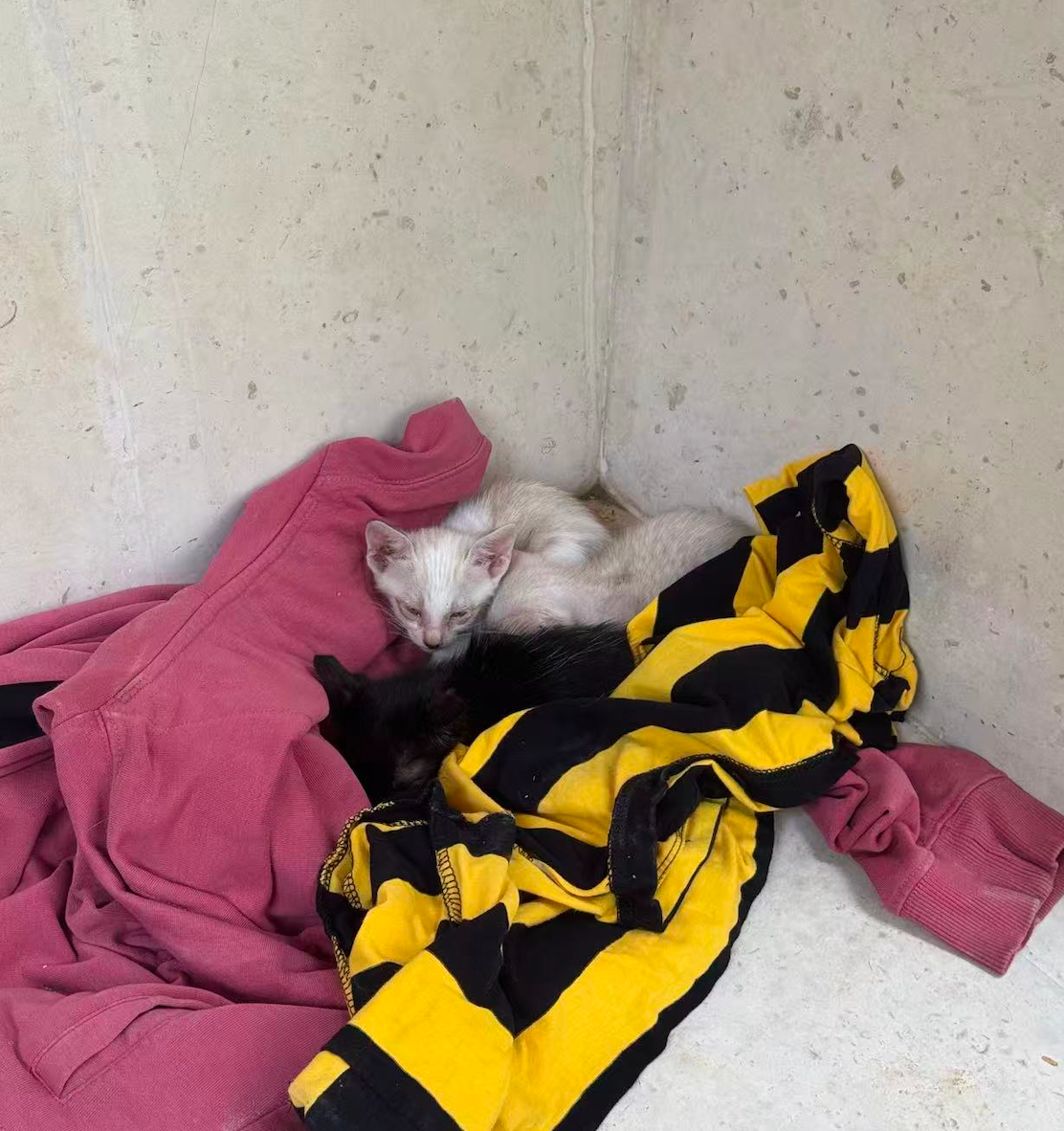
At 12:38 p.m., a message appeared in the Shamali, Education City’s female student housing’s Cat Care WhatsApp group – a photo of a veterinary invoice with the total paid amount of 295 riyals.
“I took the black and white and Siamese kitten to the vet,” Tashafee Masoodi, one of the leaders of the group wrote. “The visit was discounted but we still need to buy the antibiotics, it’s 60 QAR.”
Soon, another message followed: “Can someone buy that? I paid the 300 QAR from some donation money and my own pocket.”
Inside Education City’s female student housing in Doha, Qatar, moments like this happen often. Operations often depend on who can transfer money first voluntarily. The existence of support outside of the 20-person chat is unclear.
While the Shamali Cat Care volunteers have managed stray cats inside the area for years, the group does not have a formal institutional backing.
There are up to three million stray cats and a significant number of stray dogs in Qatar, reported by Doha News. Yet established shelters across Qatar say they operate largely without public funding.

Masoodi said food and treatment for the cats around the housing area are funded mostly through the cat care group members’ personal money. She mentioned that in some cases, due to financial difficulties, they delay treatment unless a cat’s condition becomes urgent.
“It simply depends on who has money for the cats at the moment,” Masoodi said. “Sometimes it’s also sad because we can’t take some cats to the vet unless it’s an emergency.”
She said the cat care group receives no formal backing from any institutions. It’s always managed by volunteers – feeding, treatment, and emergency care. “Institutional changes need to happen,” Masoodi said.
According to her, shelters in Qatar are often full, meaning that the students don’t have many options other than continuing to care for cats themselves.
Across Qatar, rescue and shelter groups are largely dependent on volunteers with limited infrastructure, leaving much of the responsibility to private organizations and informal networks.

The Qatar Animal Welfare Society, one of the country’s longest running-shelters, operates entirely on donations and volunteer support rather than government funding, according to its official website. The lack of institutional support becomes crucial and constantly imposes burdens for the organizations that rely on voluntary contributions.
“We don’t receive any government or external funding,” said Nagham Al Badawi. She founded Furkids Sanctuary in Qatar, a stray dog rescue and shelter organization, in 2021. “We’re self-funded, which means that we rely on our salaries.”
The shelter depends largely on volunteers and community support. “They would go to the veterinaries and close invoices or donate us food, medicines, whatever is needed,” Al Badawi said. “But that’s not enough.”
Al Badawi mentioned that she had tried to register a formal welfare organization that could cooperate with the government. “We have applied two years ago,” she said. “And it’s been two and a half years under security clearance.”

Continuing to operate without institutional support, Al Badawi said shelters struggle to address and cope with the scale of the stray animal issue in Qatar. She suggested that the long-term solutions would require stronger institutions and clearer legal frameworks.
“For stray animal management, the first step is to register an animal welfare organization that can speak and cooperate with the government,” she said. “Right now in Qatar there is no animal welfare organization that has approval for this.”
She also emphasized that laws and enforcement mechanisms need to be established to prevent the stray animal numbers from increasing by stopping abandonment and abuse from the start.
“We need to have a stronger law that covers all the negative things - abuse, dumping of dogs and cats, and a lot of other things,” she said. “We need strong, actual enforcement.”

Experts say the structural challenges that volunteers, and shelter organizers are facing are linked to the categorization of stray animal management within Qatar’s governance system.
“Stray animal care does not sit neatly under one clear category,” said Oweis Al-Salahi, a Youth Advisor at Qatar’s Ministry of Municipality and Environment. “It is usually treated as a municipal issue, linked to city management and public health, but it also touches on environmental responsibility and animal welfare.
As he suggests, the responsibility then becomes fragmented as the issue overlaps across multiple sectors. “That often means the issue is managed operationally, rather than addressed through a long-term, clearly owned policy framework,” Al-Salahi said.
Post a comment